The splashback takes more punishment than almost any other surface in your kitchen: steam, oil, sauce and daily wiping. For years, tiles were the default choice. Today, more and more homeowners choose toughened glass instead. Here is an honest comparison to help you decide.
1. Cleaning: glass wins, easily
Tiles look lovely on day one, but the grout lines between them are porous. Over time they soak up grease and discolour, and cleaning them properly means scrubbing with a brush.
A glass splashback is one smooth, non-porous surface. There are no grout lines at all, so there is nowhere for dirt to collect. A quick wipe with a soft cloth is usually all it needs. For busy family kitchens, this alone is often the deciding factor.
2. Durability and safety
Our splashbacks are made from 6mm toughened safety glass, which is around five times stronger than ordinary glass of the same thickness. It is heat resistant, which makes it suitable behind hobs and cookers, and it is backed by a 25-year warranty against cracking.
Tiles are durable too, but individual tiles can chip or crack, and grout can deteriorate and need redoing over the years.
3. Design choice
This is where glass really opens up your options. With glass you can choose:
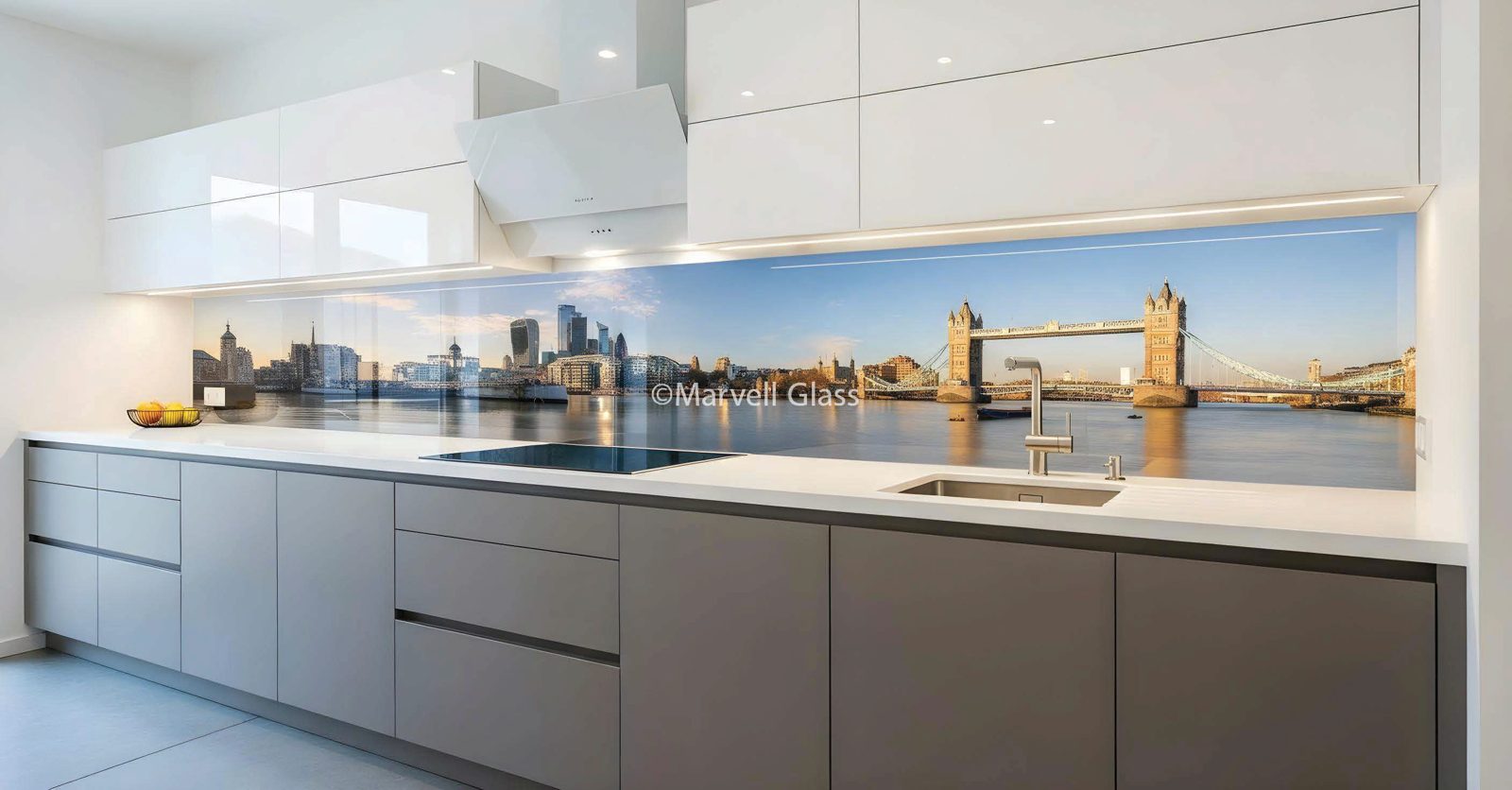
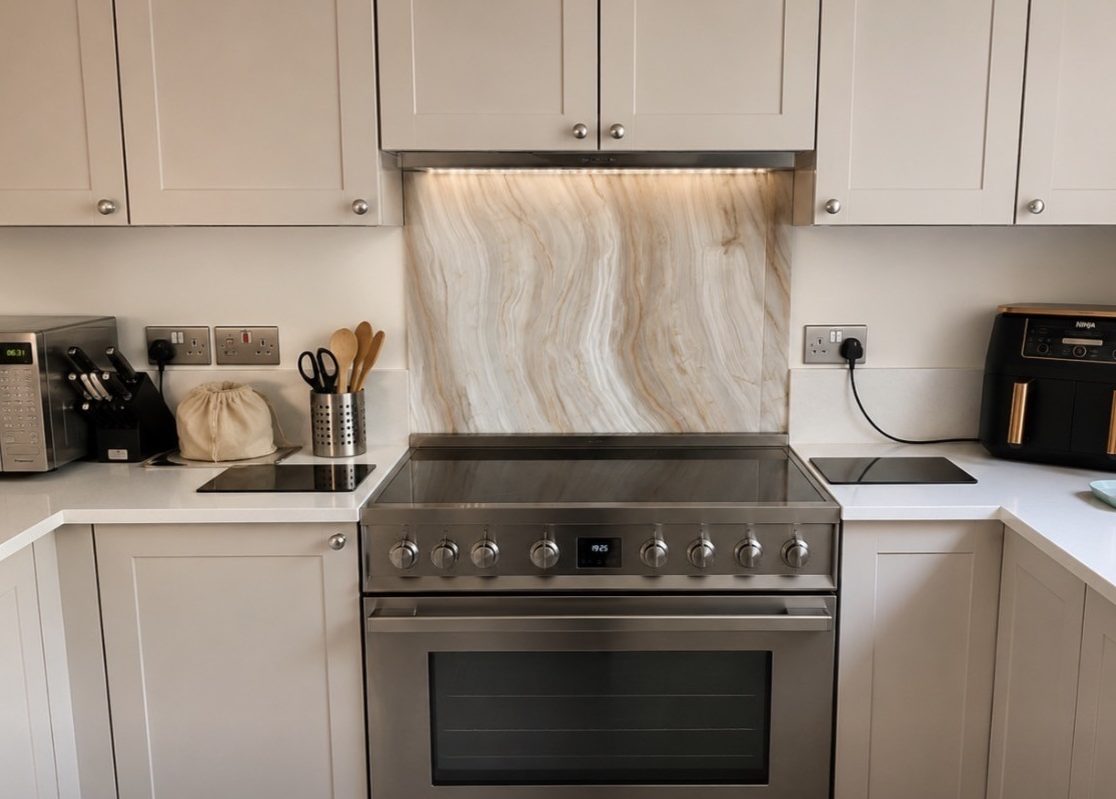
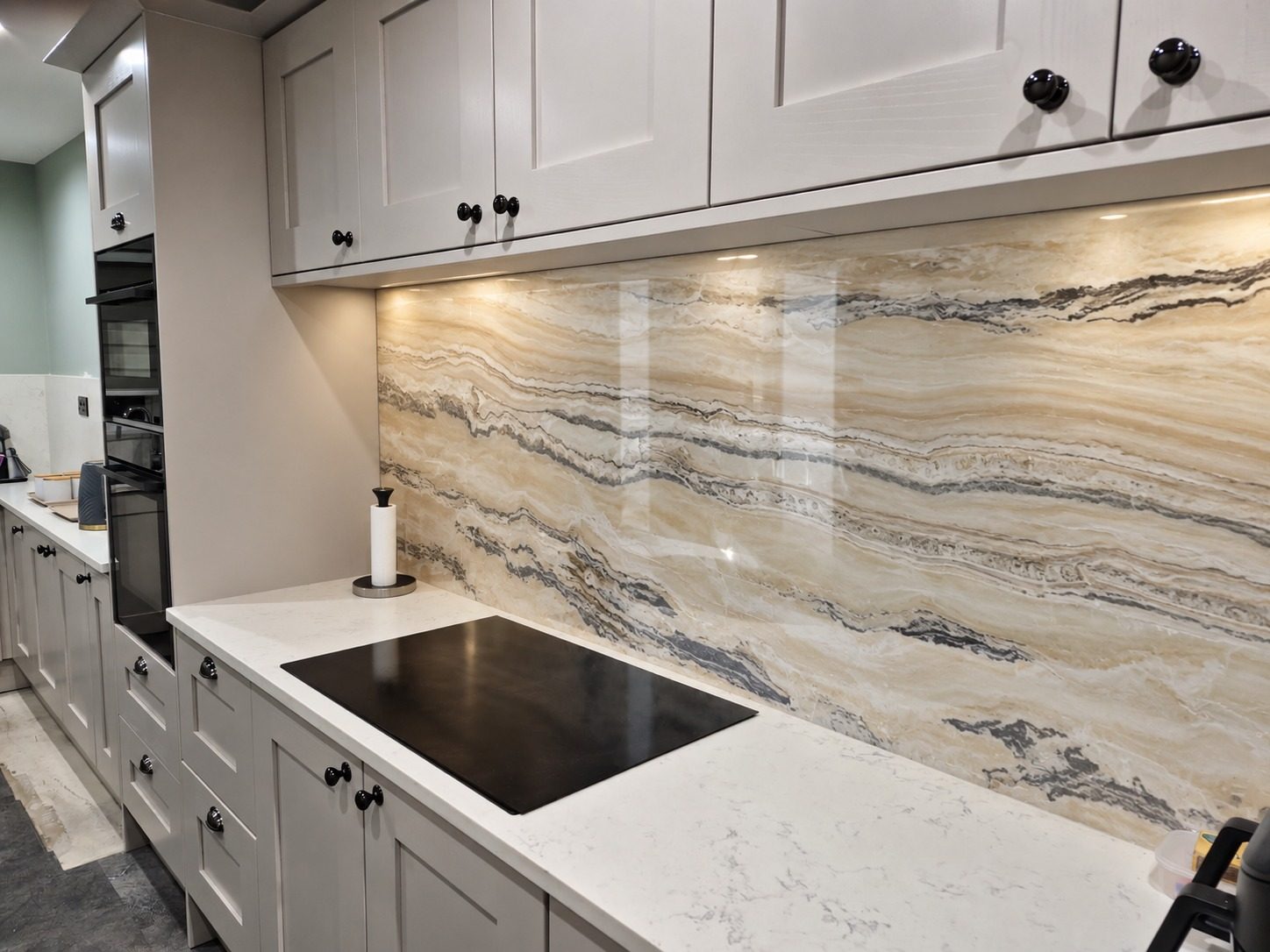
- Printed glass: marble, onyx, stone, brick, florals, landscapes and city skylines. Browse our printed glass collection.
- Your own photo: print a favourite landscape or artwork onto the glass.
- Coloured glass: 50 signature colours, back-painted onto the glass.
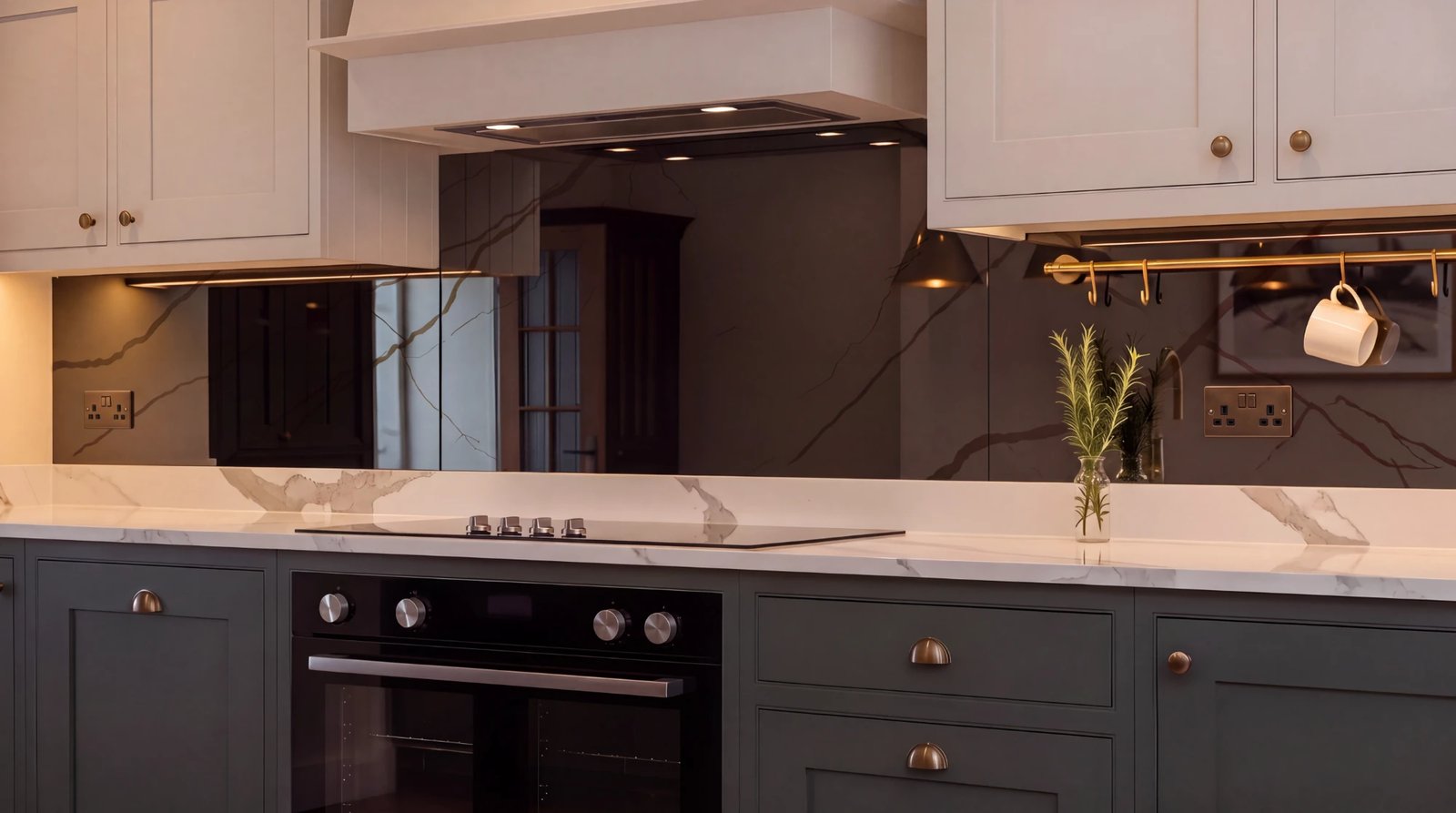
- Mirror and antique mirror: reflective finishes that make a room feel larger and brighter. See our antique mirror collection.
Love the look of tiles? Our printed range includes Moroccan, patchwork and geometric tile designs, giving you the pattern without the grout.
4. A seamless look
Because glass is cut to your exact measurements, a single panel can run along a whole wall with no joins, or just a few neat joins on longer runs. The result is clean and modern, and it reflects light around the room.
5. Installation
Tiling a splashback involves adhesive, cutting, spacing, grouting and sealing, usually over more than one day. A glass splashback is made to measure in advance, including socket cut-outs, then fitted in one go.
You can design and order your glass online and fit it yourself, or let our team measure and install it for you.
So which should you choose?
Tiles still suit some traditional kitchens. But if you want a splashback that is easier to clean, visually seamless and available in almost any look, glass is hard to beat.
Frequently asked questions
Is a glass splashback more expensive than tiles?
It depends on the size, the design and whether you choose installation. The easiest way to compare is to price your exact design online, or send us a photo of your wall for a free quote.
Can I get the look of tiles on glass?
Yes. Our printed range includes Moroccan, patchwork, geometric and metro-style designs, printed onto a single smooth panel with no grout lines.
Can a glass splashback go behind a hob?
Yes. Toughened glass is heat resistant, which is why it is so popular behind hobs and cookers. Always follow your hob manufacturer's guidance on clearances.